
Hernia Repair Surgery in Mexico — Tijuana, Guadalajara & Puerto Vallarta
Laparoscopic hernioplasty with surgical mesh. FACS-certified surgeon. Save 60–75% vs. U.S. prices. TEP, TAPP & IPOM techniques. Recurrence rate under 2%. English-speaking team.
WhatsApp Consultation Call Now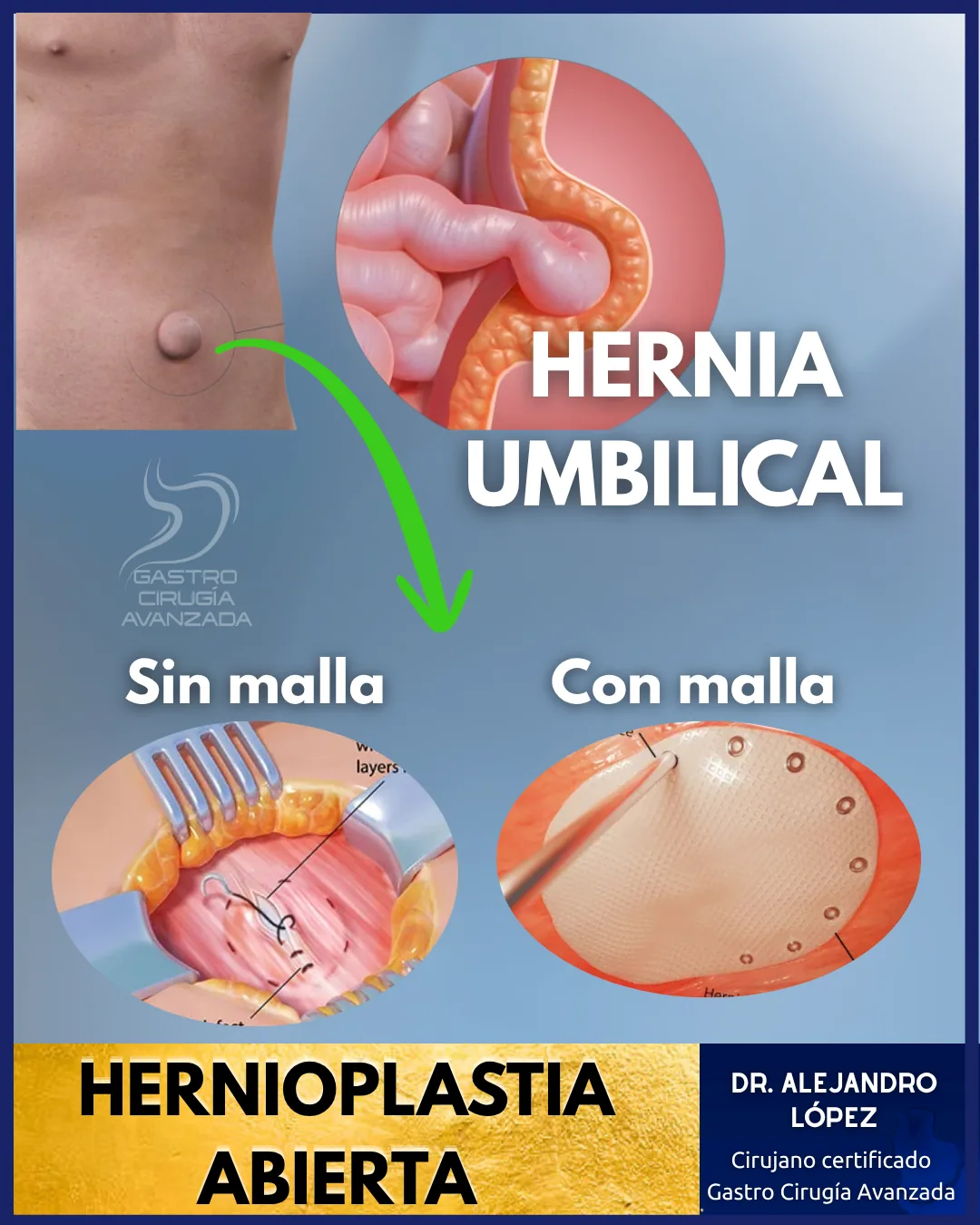
Expert Hernia Repair Surgery in Mexico
Board-certified laparoscopic and open hernia repair for international patients — inguinal, umbilical, ventral and hiatal hernias — with durable mesh and a minimally invasive recovery at accredited hospitals.
- All hernia types
- Laparoscopic or open
- Durable mesh
- Fast recovery
- Board-certified surgeon
- Accredited hospitals
Request Your Free Quote
Board-certified surgery in Mexico. A bilingual coordinator replies within one business day — no obligation.
🔒 Your information is private and used only to prepare your quote.
Thank you!
We’ve received your request. Dr. López’s team will contact you within one business day.
What Is Hernioplasty?
Hernioplasty is the surgical repair of a hernia by reinforcing the abdominal wall with a surgical mesh. Dr. López performs all hernia repairs laparoscopically — using 3 small incisions of 5–12 mm — which means less pain, faster recovery, and a recurrence rate significantly lower than open surgery.
Laparoscopic Technique
3 small incisions. Magnified visualization of the hernia defect and precise mesh placement under camera guidance.
Mesh Reinforcement
Polypropylene mesh distributes tension evenly across the repair and reduces recurrence to under 2%.
Fast Recovery
Discharge same day or next morning. Desk work in 7–10 days. Most patients travel home within 4–5 days of arrival.
Medical Tourism Ready
English-speaking team, teleconsult follow-up, airport coordination, and all-inclusive pricing — designed for international patients.
Hernioplasty by Hernia Type
🔵 Inguinal Hernia
The most common type. TEP or TAPP technique. Both sides (bilateral) can be repaired in a single operation — a major advantage over open surgery which typically requires two procedures.
🟠 Umbilical Hernia
Protrusion through the navel. IPOM-Plus technique with composite anti-adhesion mesh. Outpatient for small defects, 1 night for medium/large.
🟣 Ventral / Incisional Hernia
Abdominal wall defects, often at prior surgical incision sites. Laparoscopic IPOM repair with tension-free mesh fixation.
🔴 Recurrent Hernia
The laparoscopic approach avoids adhesions from the prior surgery and provides a clean access plane — making it ideal for repairs that have already failed once.
TEP vs TAPP: Which Laparoscopic Approach?
There are two main laparoscopic techniques for inguinal hernia repair. The choice depends on hernia type, prior surgery history, and patient anatomy.
TEP — Totally Extraperitoneal
The surgeon works entirely in the preperitoneal space without entering the abdominal cavity. Lower risk of injuring internal organs.
- Preferred for first-time inguinal hernias
- Faster recovery, no intraperitoneal sutures
- Reduced risk to bowel and bladder
TAPP — Transabdominal Preperitoneal
The surgeon enters the abdominal cavity and then dissects the peritoneum. Better visualization of the defect.
- Ideal for bilateral or recurrent hernias
- Allows full exploration of the abdominal cavity
- Greater flexibility in complex anatomy
For ventral, umbilical, and incisional hernias, Dr. López uses the IPOM (Intraperitoneal Onlay Mesh) or IPOM-Plus technique — placing composite mesh intraperitoneally with transfascial fixation.
Why Laparoscopic? The Evidence
| Aspect | Laparoscopic | Open (Conventional) |
|---|---|---|
| Incisions | 3 incisions of 5–12 mm | 1 incision of 6–10 cm |
| Postoperative pain | Significantly lower | Higher, more pain medication |
| Return to desk work | 5–10 days | 2–4 weeks |
| Recurrence rate | Under 1–2% | 3–5% without mesh |
| Bilateral repair | Both sides in 1 surgery | Usually 2 separate surgeries |
| Visible scar | Minimal, nearly invisible | Long scar at incision site |
3 Surgical Locations for U.S. & Canadian Patients
🌉 Tijuana, Baja California
Hospital DREAMS — fully accredited, 20 minutes from the San Diego border. The most accessible location for patients in California, Arizona, and Nevada. English-speaking staff, airport pickup, modern laparoscopic suites.
✈️ Fly into SAN · 🚗 20 min from border
🏙️ Guadalajara, Jalisco
Hospital Puerta de Hierro (Andares) and Hospital Innovare. Mexico's leading surgical hub with direct flights from LAX, ORD, DFW, IAH, and 20+ U.S. cities.
✈️ Direct from 20+ U.S. cities
🌴 Puerto Vallarta, Jalisco
Hospital CMQ Riviera Nayarit. International-grade facility with direct flights from LAX, ORD, DFW, and Vancouver. Recover in a world-class resort destination.
✈️ Direct from PVR · Recovery in paradise
Recovery Timeline
| Milestone | Laparoscopic | Open Surgery |
|---|---|---|
| Hospital discharge | Same day / 24 hours | 2–3 days |
| Desk work | 7–10 days | 14–21 days |
| Physical activity | 4 weeks | 6–8 weeks |
| Recurrence rate | <1–2% | 2–4% |
Medical tourism note: Most international patients plan a 4–5 day trip — arrival and pre-op labs (Day 1), surgery (Day 2), recovery and discharge (Day 3–4), travel home (Day 5). All follow-up is handled by teleconsult.
Who Is a Good Candidate for Laparoscopic Hernia Repair?
Ideal candidates:
- Bilateral or recurrent inguinal hernia
- First umbilical or incisional hernia <10 cm
- Occupation requiring fast return to work
- Small-to-medium hernia without complications
- Moderate obesity (BMI <40)
Requires special evaluation:
- Very large hernia with loss of domain
- Strangulated hernia (surgical emergency)
- Multiple prior abdominal surgeries
- Non-stoppable anticoagulation therapy
Frequently Asked Questions
Herniorrhaphy closes the defect with suture only (patient's own tissue). Hernioplasty adds a surgical mesh for reinforcement. Mesh repair has a significantly lower recurrence rate and is the current gold standard for adults.
In the U.S., laparoscopic hernia repair typically costs $8,000–$18,000+ including surgeon, anesthesia, and facility. Our all-inclusive package in Mexico covers all of these at 60–75% less. Contact us for a personalized quote based on hernia type and chosen location.
Not in every case. For very small hernias or pediatric patients it may not be needed. For adults with moderate-to-large hernias, mesh dramatically reduces recurrence risk. Dr. López selects mesh type based on defect size, location, and patient profile.
45–90 minutes depending on type and size. Bilateral inguinal hernias take 60–90 minutes. All procedures are performed laparoscopically under general anesthesia.
Most patients are cleared to fly 48–72 hours after surgery. Tijuana patients can often cross back to San Diego the day after discharge. We recommend a minimum 4-day stay: pre-op day, surgery day, recovery, and one follow-up before travel.
With laparoscopic mesh repair, the 5-year recurrence rate is under 2–3%, compared to 10–15% with suture-only closure. Risk is higher with uncontrolled obesity or excessive strain during early recovery.
Yes. Hernia repair is frequently combined with bariatric surgery (gastric sleeve or bypass), diastasis recti correction, cholecystectomy, or Nissen fundoplication — all in one surgical session to minimize travel and recovery time.
Yes, when performed by a board-certified surgeon at an accredited private hospital. Dr. López holds FACS certification (the same credential required by top U.S. teaching hospitals) and operates exclusively at internationally certified facilities. More than 2,000 hernia repairs performed with a complication rate below international benchmarks.
Ready to Repair Your Hernia?
Free teleconsult with Dr. López · Tijuana, Guadalajara & Puerto Vallarta · English-speaking team available 7 days a week
💬 WhatsApp — Free Consultation