
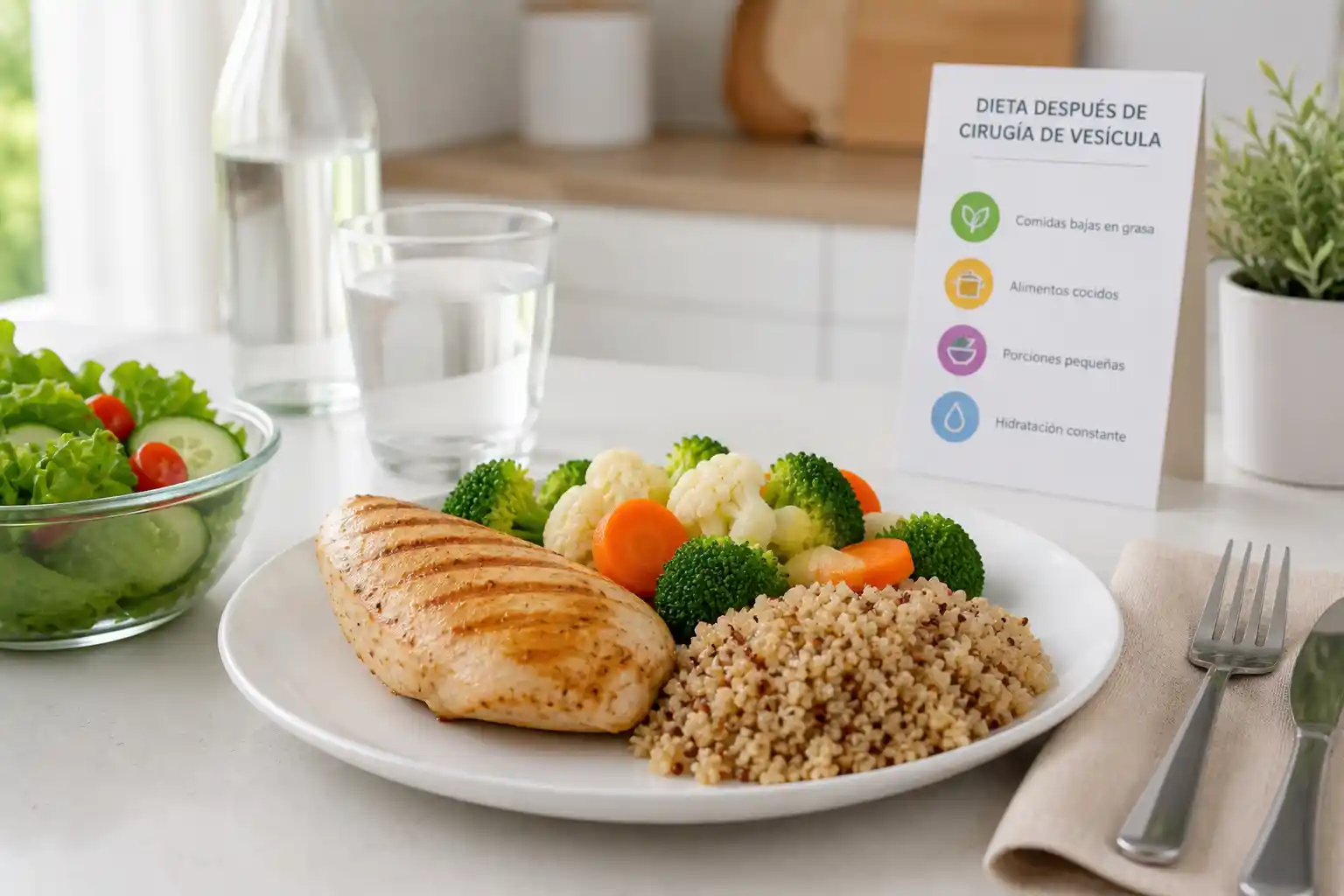
After gallbladder removal, the best diet is low in fat and built on small, frequent meals—especially for the first few weeks. Your body can still digest food normally without a gallbladder, but it needs time to adjust to a steadier, smaller flow of bile.
If you have just had your gallbladder removed (a cholecystectomy), what you eat over the next several weeks makes a real difference in how comfortable you feel. This guide walks you through a week-by-week gallbladder removal diet, the foods to favor, the foods to avoid at first, and how to reintroduce a normal diet without symptoms.
Why Diet Matters After Gallbladder Surgery
The gallbladder stores and concentrates bile, the fluid that helps you digest fat. When it is removed, your liver still makes bile—but instead of being released in a concentrated burst when you eat, bile now drips steadily into your intestine. Large, fatty meals can temporarily overwhelm this new system, which is why a gradual, lower-fat approach helps you avoid bloating, cramping, and diarrhea while your body adapts.
Gallbladder Removal Diet: Week by Week
Days 1–3: Clear and gentle
Start with clear liquids and easy-to-digest foods: broth, gelatin, plain toast, crackers, rice, bananas, and applesauce. Sip water throughout the day and avoid anything greasy, spicy, or heavy.
Week 1: Low-fat, small portions
Add lean proteins (skinless chicken, white fish, egg whites), cooked vegetables, oatmeal, and low-fat yogurt. Keep portions small and eat 5–6 mini-meals rather than 3 large ones. Aim for very little added fat.
Weeks 2–4: Rebuild variety
Slowly reintroduce more foods and a little healthy fat (olive oil, avocado, nuts) in small amounts. If a food triggers symptoms, pull it back and try again in a few days.
Week 4 and beyond: Toward a normal diet
Most people return to a normal, balanced diet within a month or two. Keep fat moderate and spread through the day rather than concentrated in one heavy meal.
Foods to Favor
- Lean proteins: skinless poultry, white fish, egg whites, tofu
- Whole grains: oats, brown rice, whole-grain toast
- Cooked vegetables and low-acid fruits (bananas, applesauce, berries)
- Low-fat dairy or plant-based alternatives
- Healthy fats in small amounts (olive oil, avocado) as you progress
- Plenty of water and fiber to prevent constipation
Foods to Avoid at First
- Fried and greasy foods (fries, fried chicken, chips)
- Fatty cuts of meat, sausage, and bacon
- Full-fat dairy, cream sauces, and butter-heavy dishes
- Very spicy foods
- Caffeine, carbonated drinks, and alcohol in the early weeks
- Large, high-fat meals of any kind
⚠ When to call your surgeon. Some loose stools are common early on. But seek medical care if you have persistent vomiting, a fever, worsening abdominal pain, yellowing of the skin or eyes (jaundice), or diarrhea that does not improve after a few weeks—these can signal a problem that needs evaluation.
Managing Diarrhea After Gallbladder Removal
A minority of people experience loose stools for a while after surgery, because bile now flows continuously into the intestine. This usually improves over weeks to months. Eating smaller, lower-fat meals, adding soluble fiber (oats, psyllium), and limiting caffeine and very fatty foods typically helps. If it persists, your doctor can suggest additional options.
Recovery With Dr. Alejandro López
Every patient who has a laparoscopic gallbladder removal with Dr. López receives a clear, personalized post-op nutrition plan and direct access to a bilingual coordinator during recovery. For international patients traveling to Mexico, we build the diet timeline around your travel dates so you recover comfortably. See transparent USD pricing or request a free review of your case.
Considering gallbladder surgery in Mexico?
Get an all-inclusive quote and a personalized recovery plan from a board-certified surgeon—no obligation.
Request Your Free Quote 💬 WhatsApp UsFrequently Asked Questions
How long do I need to follow a special diet after gallbladder removal?
Can I eat fat again after my gallbladder is removed?
Why do I get diarrhea after eating since my surgery?
What should I eat the first day after gallbladder surgery?
Will I lose weight after gallbladder removal?
This article is for general education and does not replace personalized medical or nutritional advice. Follow the specific instructions given by your surgeon.